Aham · अहम्
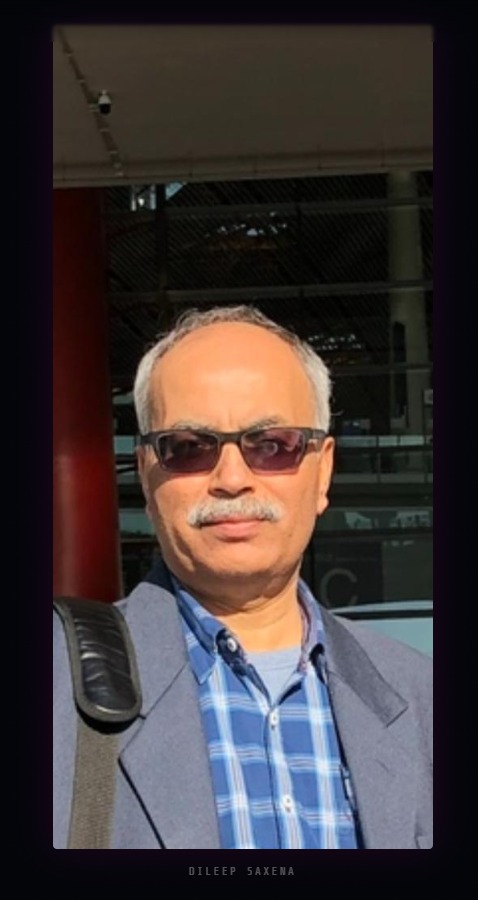
For over forty years, I have worked as a cardiac anesthesiologist — caring for patients undergoing complex heart surgery, managing their critical care, and witnessing the most profound transitions a human body can undergo.
My Anesthesiology Specialty career began in India after graduating (MBBS, 1978). Anesthesia management was changing, from the fading era of Ether inhalation techniques, red rubber ET tubes and green colored transparent Basic Bird's Ventilators. Explanations about mode of anesthetics action were then not fully understood by me.
This was a transitional period in scope and practice of Clinical Anesthesiology, as better explanations still emerged for mechanism of Anesthetic Drug action, its relation in clinical stages, and correlations to changes in level of awareness and Consciousness. Membrane receptors' prime roles, were although identified, still a big explanatory gap persisted.
I completed training with Post graduation degree (MD in Anesthesiology) and National Board of Examination Certification (NBE) in 1983.
Soon joined to my further training as Senior Resident at Govind Ballabh Pant Specialty Hospital at New Delhi. I was now exposed to use of advanced monitoring in specialty anesthesia relevant to neuro-monitoring, as evoked potential monitoring.
Particularly Neuro monitor 'Neurotrac' by Interspec was able to demonstrate Spectral edge frequency changes in relation to various Anesthetics, stages of anesthesia. It was so visual, convincing and very appealing, the very initial exposure as peeping window into brain.
Later I spent a decade as faculty at two of India's premier institutions — the Sree Chitra Tirunal Institute of Medical Sciences, Trivandrum, and the All India Institute of Medical Sciences (AIIMS), New Delhi, as Associate Professor — teaching, researching, and contributing to the country's early cardiac transplant and pediatric cardiac surgery programmes.
All this time the complexity in techniques as perfusion technique supports during Cardiac arrest, Resuscitations, cardiopulmonary bypass (CPB), and managements of Complex Cyanotic Paediatric patients with Deep Hypothermia and TCA (Total Circulatory Arrests) were also evolving. Intensive care recovery observed was truly an experience of human brain tolerating all the physiological insults, adversity and still able to bounce back to normal functions — wonderful, in fact surreal! But not always, as some never followed predicted outcomes.
This was also the time to use brain function monitors like BIS algorithms. Navigation between normal, between desired target value looked very logical. New range of analytical computer based programmes had arrived. Anesthesia stages looked predictable, also easily manageable. But this still eluded correlations between “HOW and WHY.”
In 1995, I had moved to Abu Dhabi, where I have served for further three decades as Specialist Cardiac Anesthesiologist in Mafraq Hospital, Sheikh Khalifa Medical City, and at Burjeel Hospital.
In the operating theatre, I have repeatedly observed something that no textbook fully explains — the dissolution of consciousness under anesthesia, and its mysterious return. Hypothermic circulatory arrests, where the brain goes silent. Resuscitations, where awareness re-emerges from the edge. These clinical experiences, witnessed thousands of times over four decades, compelled me to look beyond the purely medical.
I found that the ancient Vedantic tradition had been asking the same questions for millennia — What is the self? What is awareness? What remains when everything else is taken away?
This website is my attempt to bring these two worlds together: the clinical observations of a lifetime in cardiac anesthesia, and the philosophical inquiry of Vedanta — explored through the lens of modern neuroscience.
It is not an academic paper. It is not a textbook. It is one person's contemplation — shaped by forty years of standing at the boundary between life and its absence.
Dileep Saxena
"The observer cannot step outside the observed. The one who asks 'What is Consciousness?' is Consciousness asking about itself."— Dileep Saxena