
AI from Brain
Modern AI is powerful but disembodied — it never closes the loops required for identity, ownership, and error correction that a biological self does.
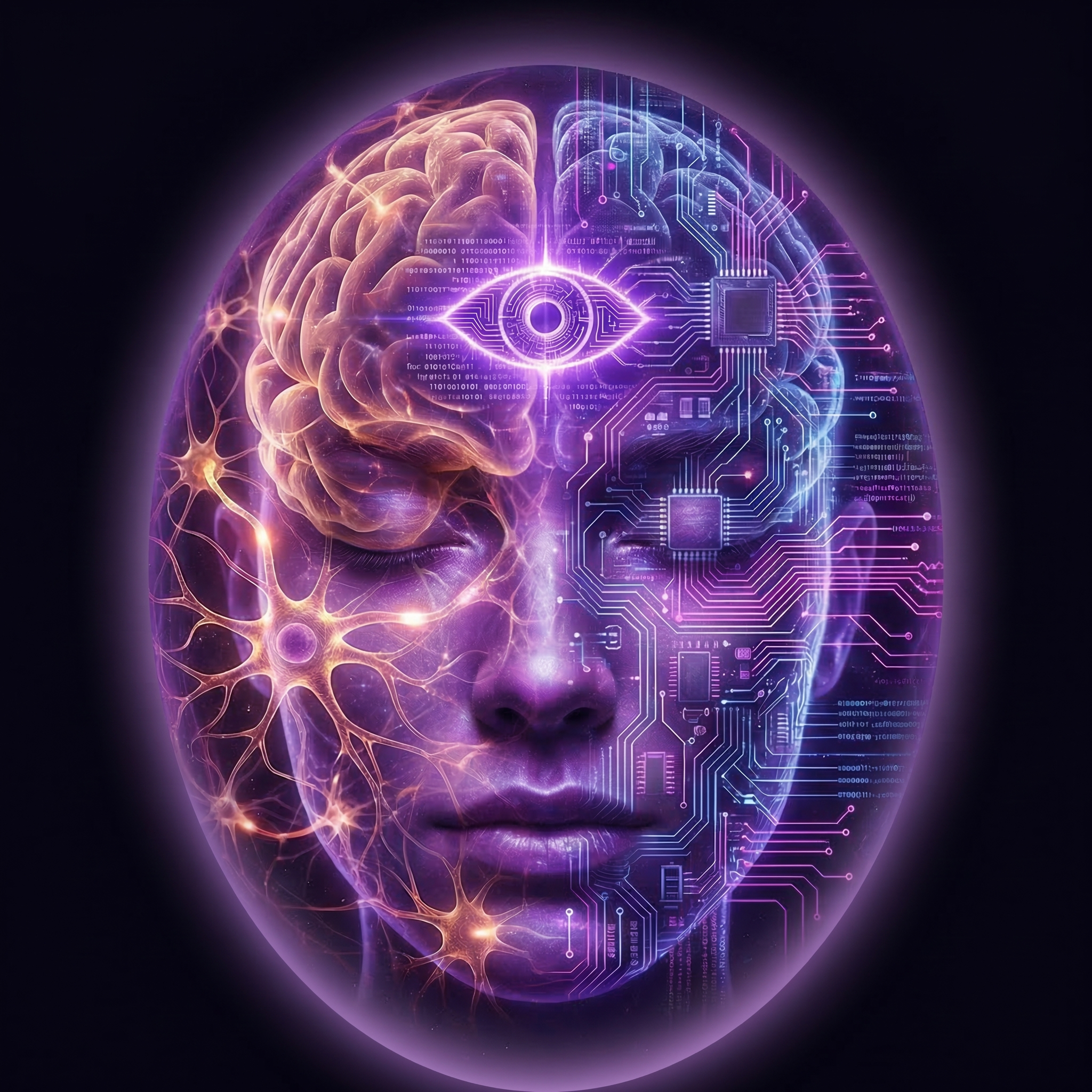
Modern AI extends intelligence outward, like an external projection of cortical function.
It mirrors language, memory, and pattern, yet remains different from biological mind.
The brain computes not only through excitation, but through inhibition, veto, and the power to say no.
NOR-like logic, silence, and gating are central to living decision systems.
Biological intelligence unfolds within closed loops of body, consequence, and survival.
AI, by contrast, often operates in an open informational space without existential stake.
The brain moves through state spaces shaped by recurrence, rhythm, and topological return.
Its memories live in embodied loops, not only in symbolic representations.
AI can simulate knowledge, but it does not yet inhabit a living Now in the same way.
It lacks the full closure of self-correction through pain, urgency, ownership, and mortality.
This is why false positives in humans become fear-laden memory, while AI errors remain structurally different.
Even so, AI can exceed humans in scale, speed, and combinational reach.
Humans retain advantages in embodiment, value, felt consequence, and lived presence.
The real question is not whether AI imitates the brain, but what essential loop still remains open.
Bodha may begin when intelligence, memory, embodiment, and self-correction finally meet in one living circuit.