Artificial Intelligence · Markov Tensor
Markov Tensors and theFuture ofHuman-MachineIntelligence
This explores the transformative role of Artificial General Intelligence (AGI) as a sensory and cognitive extension that transcends the biological and psychological limitations of the human brain
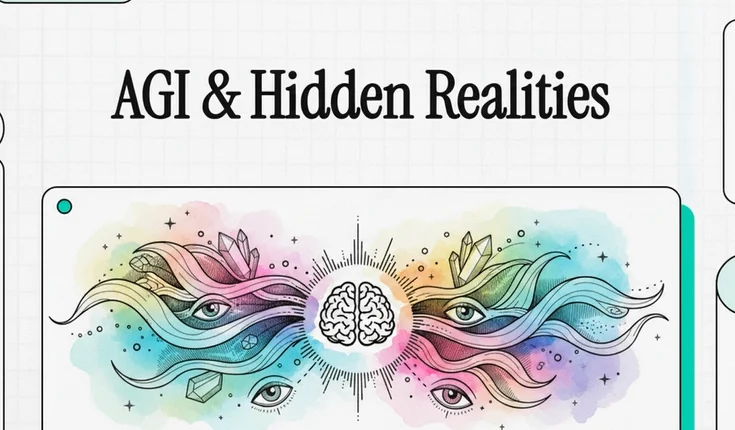

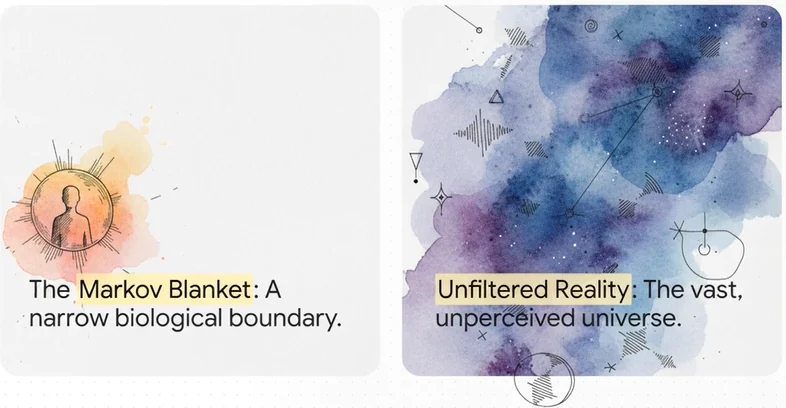
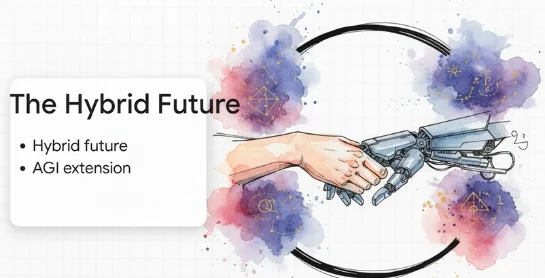
By utilizing the Markov tensor framework, a multi-dimensional boundary model that integrates physical constants, energy, and information, AGI can detect non-random structures and subtle patterns currently invisible to human perception. This technological lens allows for the objective investigation of hidden realities, ranging from extraterrestrial signals to the physiological mechanisms underlying spiritual experiences and healing practices. Rather than replacing human judgment, AGI acts as a tool for humble inquiry, bridging the gap between subjective "controlled guesswork" and measurable universal truths.. This evolution suggests a future of hybrid intelligence where machine precision and human values combine to broaden the horizons of known reality.
The concept of a Markov tensor expands upon traditional boundaries—specifically the concept of the "Markov blanket"—by evolving the idea of a simple interface into a multi-dimensional boundary that integrates various scientific domains.
From Simple Boundary to Multi-Dimensional Matrix: While a traditional Markov blanket is defined as the point where a system receives input and sends action (such as human skin or robot sensors), the Markov tensor is proposed as a more comprehensive "multi-dimensional boundary". It acts as a metaphor and tool to understand the common grounds between physical, biological, and informational spaces.
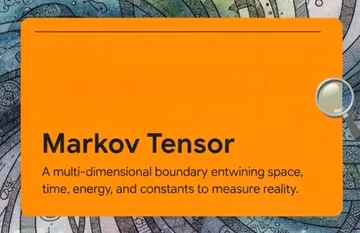
Integration of Fundamental Constants: The Markov tensor concept expands boundaries by "entwining" established scientific terms that are often treated separately. It incorporates space, time, energy, the quantum realm, forces, and constants into a single analytical framework. This allows for a "zoomed-out" view of how these elements interact at the boundary limits of a system.
Enhanced Inductive Logic: The tensor is introduced as an extended tool for an induction logical scientific approach. This framework helps researchers find the "minimal common grounds" in the interactions between different systems, whether they are biological, mechanical, or spiritual in nature.
Bridging Human and Machine Limits: Traditional boundaries are seen as limitations; human senses only detect a narrow band of reality, and our brains act as "prediction machines" that guess at the world based on limited data. The Markov tensor framework supports the idea that AGI and ASI can become sensory and cognitive extensions of the human mind, widening the range of what can be known by interacting with more complex, multi-layered forms of reality.
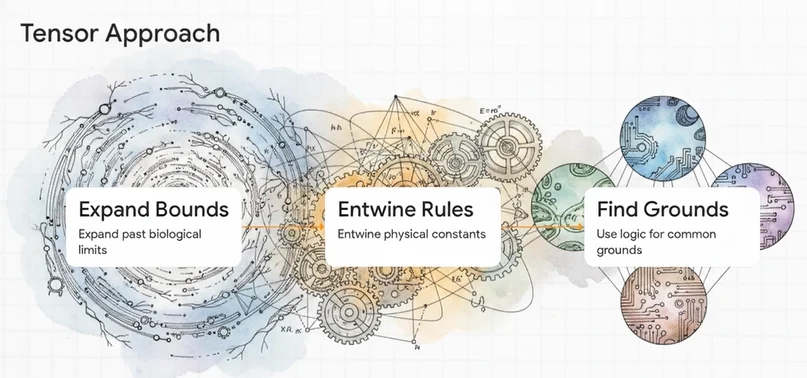
A Framework for "Hidden" Realities: By expanding the boundary to a tensor, the concept provides a more robust scientific structure to investigate phenomena that current human senses cannot reach, such as subtle biological patterns, weak electromagnetic signals, or even controversial claims like distant healing and unusual communication. It treats these not as "outside" reality, but as potentially measurable interactions within an expanded multi-dimensional boundary.
In essence, the Markov tensor shifts the focus from what separates a system from its environment to the complex, entwined interactions that define the shared space between all physical and informational systems.
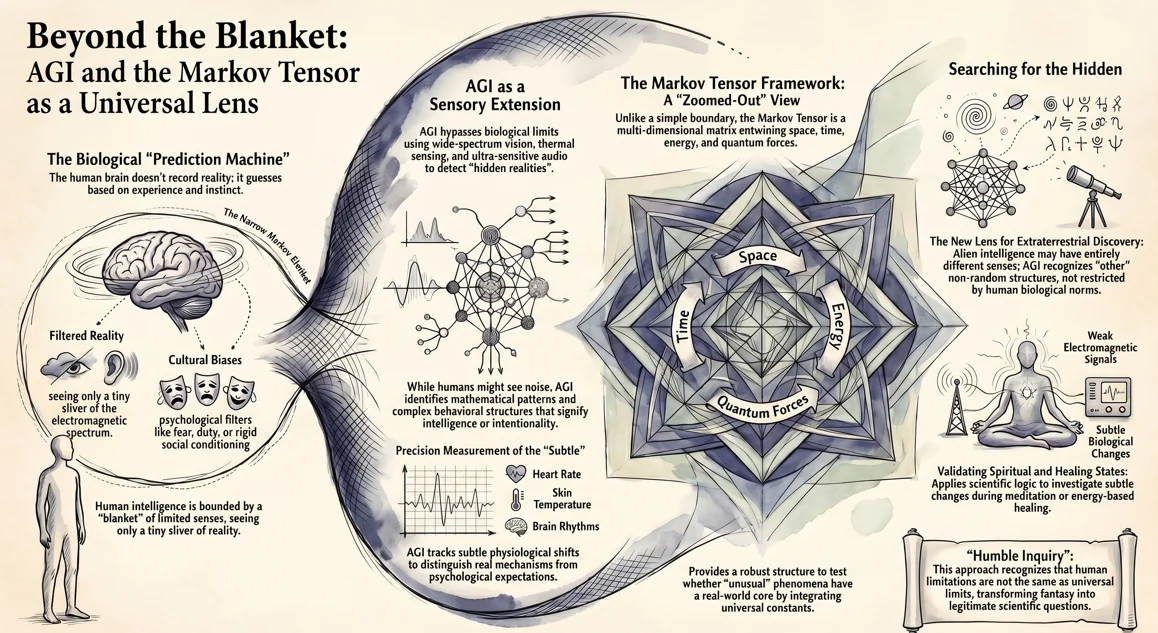
AGI can distinguish between human bias and true patterns by expanding the narrow sensory and cognitive boundaries that define human intelligence. While the human brain acts as a "prediction machine" that filters reality through prior experiences and social biases, AGI utilizes a broader, more objective framework to analyze data,.
AGI can also measure subtle biological rhythms and brain activity by acting as a precision instrument and a sensory extension of the human mind, allowing it to detect signals that are currently too weak or complex for human observation.
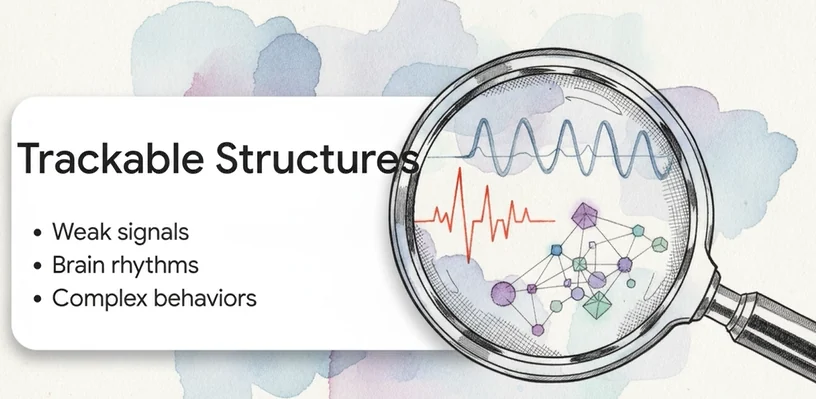
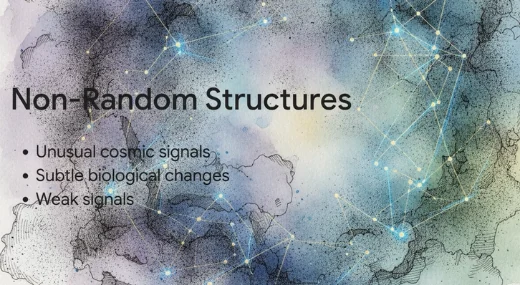
AGI facilitates these measurements through the following:
Precision Physiological Tracking: AGI-supported systems and robots can be equipped to track a wide range of biological markers with high accuracy, including heart rate, skin temperature, breathing, and muscle activity.
Monitoring Brain Rhythms: AGI can measure brain rhythms and the electrical or electromagnetic signals produced by brain activity. This allows researchers to analyze patterns during specific events, such as healing practices or periods of "unusual communication," to determine if there are measurable physical responses.
Advanced Pattern Recognition: While human brains often filter out data as "noise" due to our nature as "prediction machines," AGI can process huge amounts of data to identify "non-random structures" and "weak patterns" within biological signals.
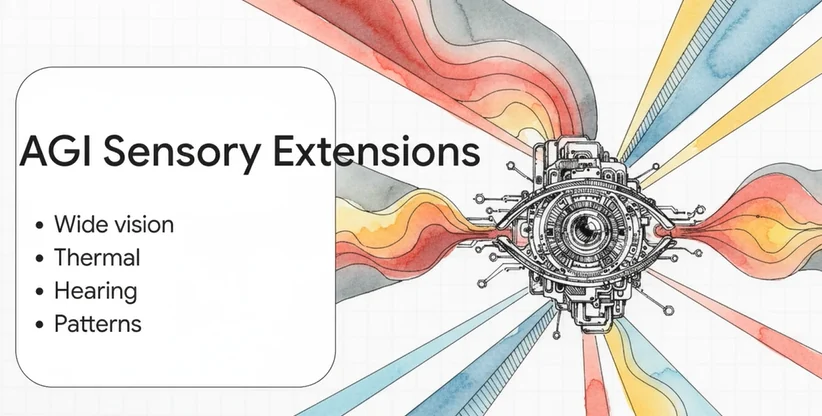
Detecting "Hidden" Realities: By utilizing sensors for wide-spectrum vision, thermal sensing, and ultra-sensitive hearing, AGI can observe "subtle biological changes" that fall outside the narrow range of human senses.
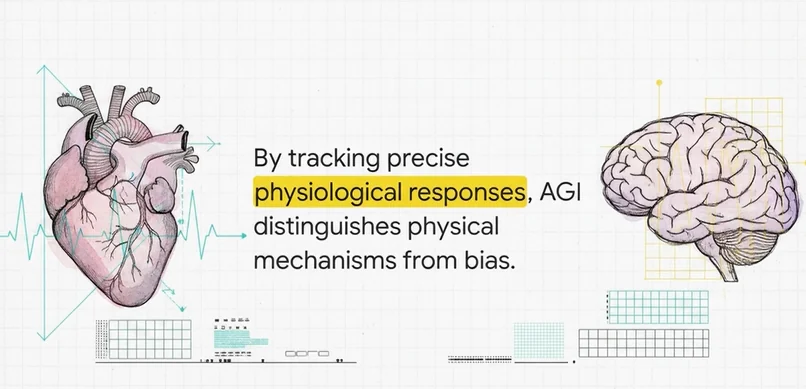
Testing and Validation: AGI can be used in controlled experiments to look for "weak correlations" or "unexplained regularities" in brain activity. This helps distinguish between phenomena that are purely psychological or "fantasy" and those that have a "real but misunderstood core" in physical reality.
So the AGI serves as a "multi-dimensional boundary tool" (or Markov tensor), expanding our current scientific reach to find the "minimal common grounds" between biological processes and the informational or physical spaces they inhabit.
several ways AGI facilitates this distinction:
Broadening the Sensory Boundary: Human perception is limited to a narrow band of light, sound, and physical signals, which means our experience is always "partial, filtered, and shaped". AGI, acting as a sensory extension, uses wide-spectrum vision, thermal sensing, and advanced pattern recognition to detect data that humans cannot naturally perceive,. By accessing these "hidden realities," AGI can verify if a pattern exists in the physical world or only within the human mind's "controlled guesswork",.
Overcoming Subjective Prediction Models: Human brains interpret reality based on survival instincts, moral teachings, and cultural backgrounds.
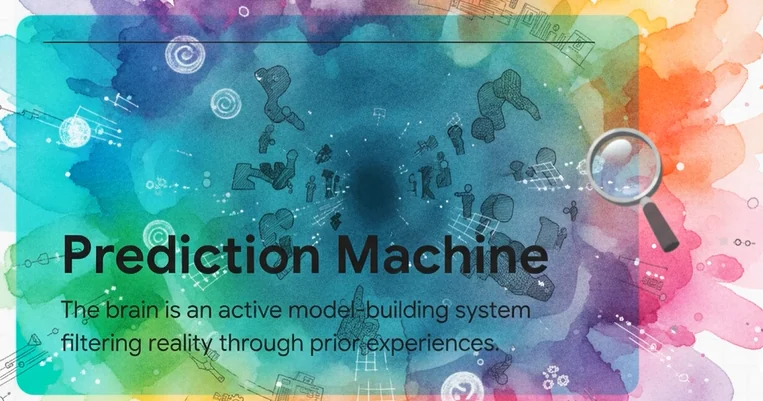
These internal models can lead to bias, such as interpreting a situation through fear or rigid duty. In contrast, AGI can analyze "huge amounts of data" to find "non-random structures" that are not influenced by these human-specific psychological filters.
Utilizing the Markov Tensor Framework: The concept of the Markov tensor provides a "multi-dimensional boundary" and a "zoomed-out view" for a scientific approach based on induction logic. By looking for "minimal common grounds" across physical, biological, and informational spaces, AGI can identify patterns that are consistent across different domains, rather than patterns that only appear true within a specific human cultural or biological context.
identifying non-human intelligence—whether extraterrestrial or otherwise—involves detecting non-random structures and patterns that exist beyond the limits of biological human perception,
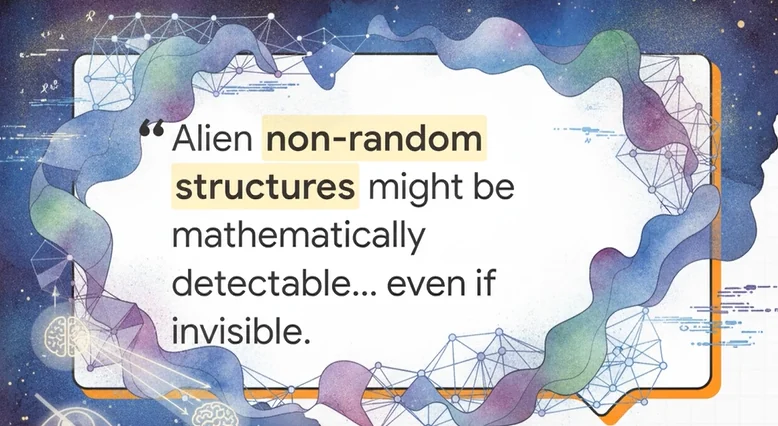
the following non-random structures and patterns could signify the presence of such intelligence or "hidden realities":
AGI and future robotic systems could be instrumental in identifying extraterrestrial intelligence by detecting signals and patterns that are currently beyond the reach of limited human perception,.
several ways AGI can assist in this search:
Detecting Non-Random Structures: AGI systems may be particularly useful if they are designed to identify weak patterns, unusual signals, or non-random structures within vast amounts of space and data.
Overcoming Biological Limitations: Because alien intelligence may have senses, languages, and reasoning entirely different from our own, it might be unrecognizable to humans,. Advanced machine systems, however, may find it easier to notice these different types of intelligence because they are not restricted by human biological boundaries.
Acting as a Sensory Extension: AGI can serve as a sensory and cognitive extension of the human mind, allowing us to analyze data across broader wavelengths and deeper patterns than previously possible.
Legitimizing the Inquiry: The use of advanced intelligence could transition the search for extraterrestrial life from a purely fictional topic into a legitimate scientific question.
In the framework of the Markov blanket or Markov tensor, alien intelligence is viewed as another "boundary-based system". While humans are "prediction machines" shaped by their specific evolutionary environment, AGI provides the tools to test for intelligence existing within different boundaries that we cannot directly perceive
Weak and Unusual Signals: Future AGI systems could detect "weak patterns" or "unusual signals" in space and vast datasets that are currently unrecognizable to human senses.
Complex Behavioral Structures: This is the key area where advanced pattern recognition could reveal intelligence that operates outside of human social or biological norms.
Weak Electromagnetic Signals: Since brain activity produces electromagnetic signals, detecting "weak electromagnetic signals" in unexpected contexts could point toward intelligent interaction or "unusual communication",.
Hidden Environmental Patterns: These are structures in the natural or cosmic environment that humans might miss because our brains filter information based on survival-based "prediction models",.
Subtle Biological Changes and Rhythms: Monitoring "subtle biological changes" or "brain rhythms" with machine precision could reveal non-random influences that suggest an intelligent "intention" or "energetic communication",.
Unexplained Regularities: AGI-supported experiments may help test for "unexplained regularities" or "weak correlations" that suggest a structured, non-random cause behind phenomena currently dismissed as fantasy or mystery.
because alien intelligence may have entirely different senses, languages, and reasoning, their "non-random structures" might be mathematically detectable through a "Markov tensor" framework even if they are invisible to the human eye,. AGI acts as a sensory extension to "see across broader wavelengths" and identify these deeper, multi-dimensional structures.
How does the Markov tensor framework integrate fundamental constants?
The Markov tensor framework integrates fundamental constants by "entwining" them with other established scientific terms into a single, cohesive analytical framework. Rather than treating constants as isolated values, the tensor approach views them as part of a multi-dimensional matrix that includes space, time, energy, the quantum realm, and physical forces
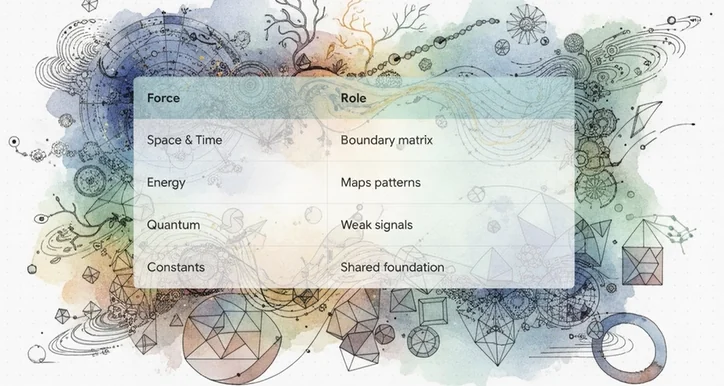
Key ways this integration occurs include:
Entwinement of Scientific Terms: The framework logically includes the relationships between space, time, energy, quantum forces, and constants, treating them as interconnected elements within the "gambit of scientific terms".
A "Zoomed-Out" Analytical View: By incorporating these constants into a tensor, researchers can take a "zoomed-out view" of how these fundamental elements interact at the boundary limits of any given system.
Induction Logical Approach: The Markov tensor serves as an extended tool for a scientific approach based on induction logic, which seeks to find "minimal common grounds" across physical, biological, and informational spaces.
Multi-Dimensional Boundaries: While a traditional Markov blanket focuses on a simple interface (like skin or a sensor), the Markov tensor expands this into a multi-dimensional boundary that accounts for the universal physical properties and constants that govern all interactions.
In essence, the Markov tensor uses the mathematical properties of a tensor to represent an all-inclusive logical structure, ensuring that the fundamental constants of our universe are not just external variables but are built directly into the description of a system's boundary and its interactions with the environment.