The body enters the dream
Sleep is not a complete withdrawal from the body. Even in dreams, the brain continues to receive signals from within: movement, pressure, pain, breathlessness, heartbeat, temperature, and sound.
But these signals do not enter the dream as plain medical facts. They pass through an inner editorial system. The dreaming brain asks one question:
Can this signal be fitted into the dream without waking the sleeper?
If the answer is yes, the dream changes its story. A leg jerk may become falling, running, being pulled, or tripping. Chest pressure may become a weight on the body. Breathlessness may become drowning, choking, burial, or floating helplessly in space.
The body sends a signal. The dream turns it into narrative.
The Thalamic Gate
The thalamus acts as the first gatekeeper. During deep sleep, most signals from the body and outside world are blocked. During REM sleep, the gate opens only partially.
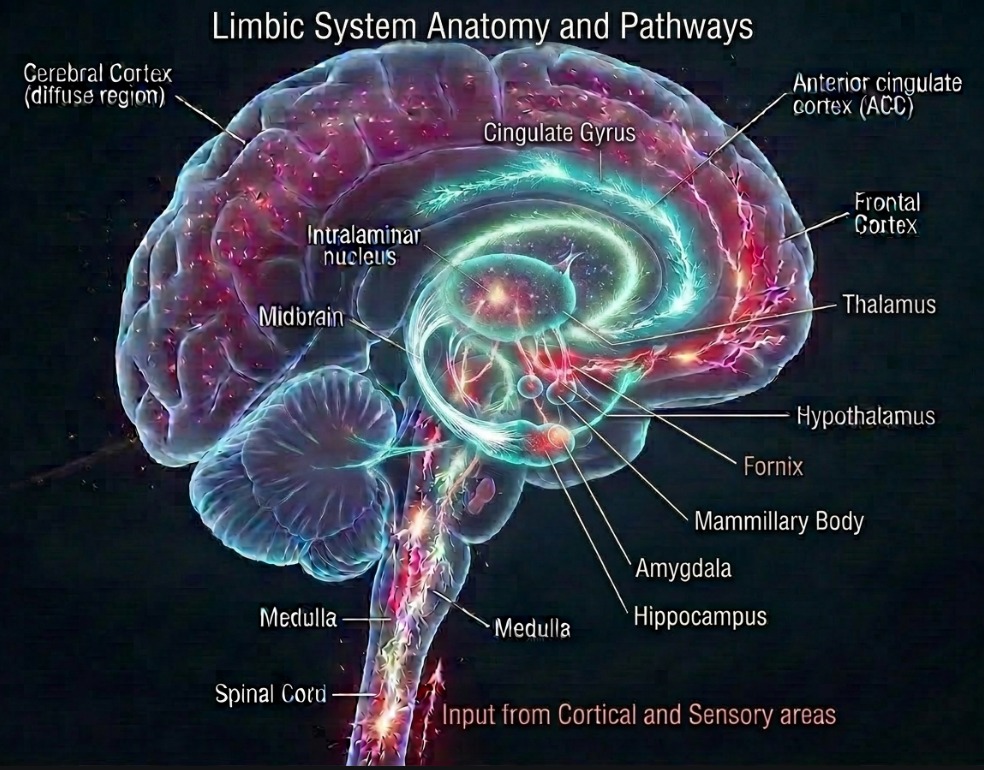
This opening is not uniform. It depends on the strength of the signal, its emotional importance, and the exact microstate of REM sleep.
The brain is deeply absorbed in its inner world. The dream is vivid, intense, and largely cut off from outside reality.
A narrow window of sensitivity opens. During this window, a strong body signal can enter the dream.
This is the first editorial decision: block, transform, or wake.
Live Script Adaptation
Once a signal enters the dreaming brain, it is not treated literally. It is woven into the ongoing dream. The dream does not stop and say, 'There is a bodily disturbance.' Instead, it creates a scene that explains the sensation.
The dream protects sleep by adapting the story. Adaptation beats awakening.
Wakefulness is the last resort. If the signal can be explained inside the dream, sleep continues. Only when the signal becomes too strong, too urgent, or too threatening does the brain break the dream and wake the sleeper.
The Dream Editor
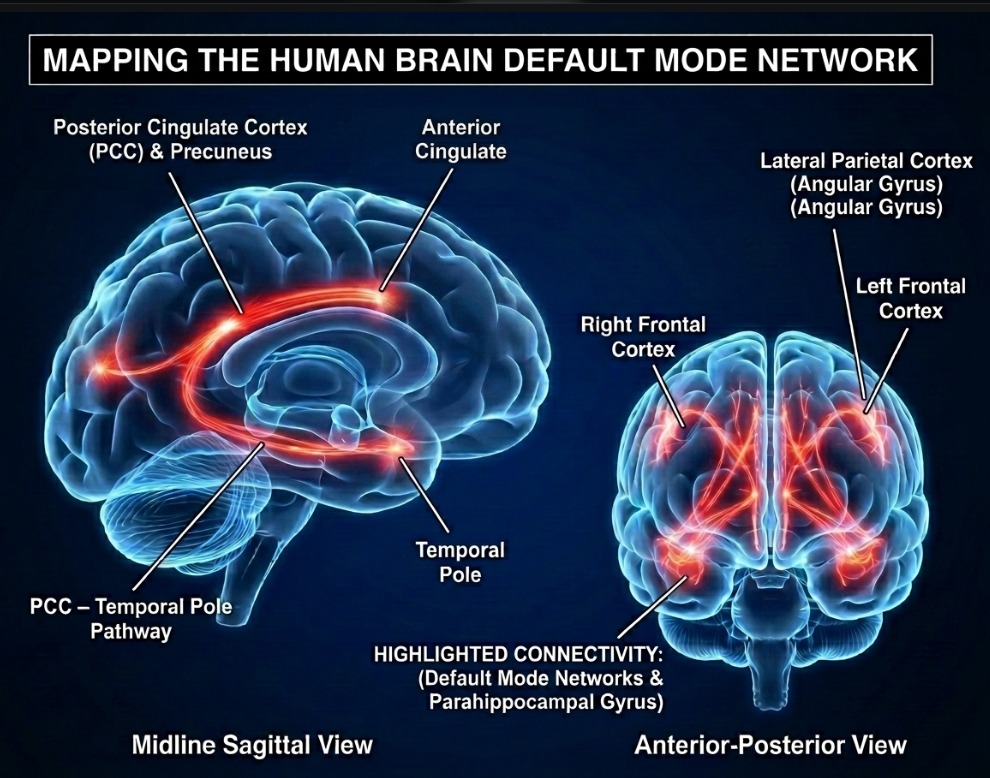
Several brain systems help create this transformation. The default mode network acts like the live scriptwriter. The hippocampus searches memory for images, places, people, and past emotional experiences that match the incoming signal. The amygdala adds emotional force: fear, urgency, wonder, panic, or danger. The somatomotor map places the sensation into the dream body.
Keeps the inner narrative moving.
Finds memories and images that fit the sensation.
Adds urgency, fear, intensity, or wonder.
Places the signal into the dream body.
Together, these systems convert body sensation into symbolic experience. During REM sleep, the rational reality-checking system is quieter. The dream does not ask whether the story is logical. It asks whether the story emotionally fits the feeling.
The body whispers. The dream makes cinema.
Sleep Apnoea as an Example
Sleep apnoea is introduced here only as an example because it shows this mechanism clearly. The body sends several powerful signals at once: airflow is blocked or reduced, oxygen begins to fall, carbon dioxide rises, the heart and nervous system become alarmed, and the brainstem prepares emergency arousal.
Drowning in dark water
Falling into a deep well
Choking / strangulation
Buried alive
Weight on chest
Breathing failure in space or deep sea
Being chased or trapped
Paralysis / helplessness
Blocked passage
Sealed door / clogged pipe
Missed event / helplessness
Global fear or rage without direct breathing content
These are not random images. They are symbolic translations of the body's breathing crisis. The dream is trying to explain suffocation without immediately waking the sleeper.
Adapt the script first. Wake only when necessary.
The Severity Paradox
There is also an important paradox. In mild or moderate sleep apnoea, REM sleep may remain intact enough for the brain to build vivid nightmare scenes. The person may remember dreams of drowning, choking, falling, or being trapped.
But in severe sleep apnoea, REM sleep can become too fragmented. The brain wakes too often. The dream editor does not get enough time to complete the script. So the breathing disorder may be worse, but dream recall may be lower.
Closing
Dreams are not only imagination. They are the meeting point of body, memory, emotion, and consciousness.
The sleeping brain protects sleep when it can. It wakes us when it must. Between these two states, it performs a remarkable act of transformation. It takes the raw signals of the body and turns them into symbols, scenes, characters, and stories.
We are not only dreamers of dreams.
In sleep, we become the place where the body and consciousness quietly speak to each other.