Evolutionary foundations with Visionary Fovea and Gaze
DILEEP SAXENA
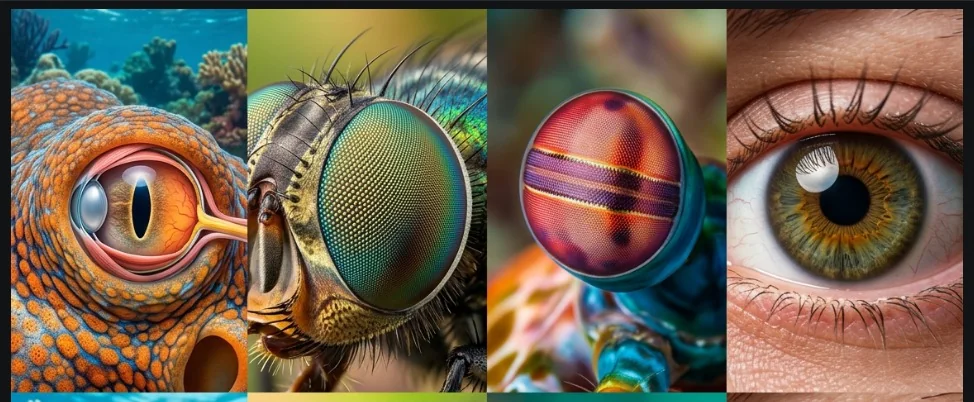
Figure 1. Eye comparison illustration.
All along the evolution of life in our niche called Earth, visible-spectrum energy from sunlight created wonders and surprises.
Not that the latent parts of all other forms of energy and forces in nature can be denied gratitude for the creation and support of life and its evolution.
This present discussion narrows to vision, accelerating the pace of intelligence through its window for ultimate perception guidance in 3D space—vivid, vibrant and bright.
Biological sense inputs in all other forms, such as space-gravity effects, vibrations, metabolism, thermal receptors and homeostatic valence, were foundational, working under the guidance of the genetic codes of survival.
The sense of VISION opened “Pandora’s box”. As this spectral segment of electromagnetic radiation corresponding to the visible domain was exponentially exploited, fateful possibilities appeared—almost as if in a tiny sparkle of evolutionary timescales.
From photosensitivity to cortical vision
Initially, during evolution in aquatic life cycles, the neuroreceptors for photosensitivity contributed to circadian calibrations and motion guided by light–darkness, heat, hunger, mating, defence and predation.
The photoreceptive neurons at the cephalic end in ANS paved the beginning of the “vision story”.
Lateral migration of eye bulbs as frontal eye patches brought perception of directions—to steer, explore, identify, approach and avoid. The background was supported by the tectum and, later, thalamic radiations for cortical interpretations.
Earlier, the Cambrian explosion, in the race for defence and predation, diversified the variety of eye formations.
And the real cortical change appeared with expansion of the thalamus, coping with cortical affordance maps and CTC loops in vertebrates, using VISION as the primary sense for evaluation in interactions.
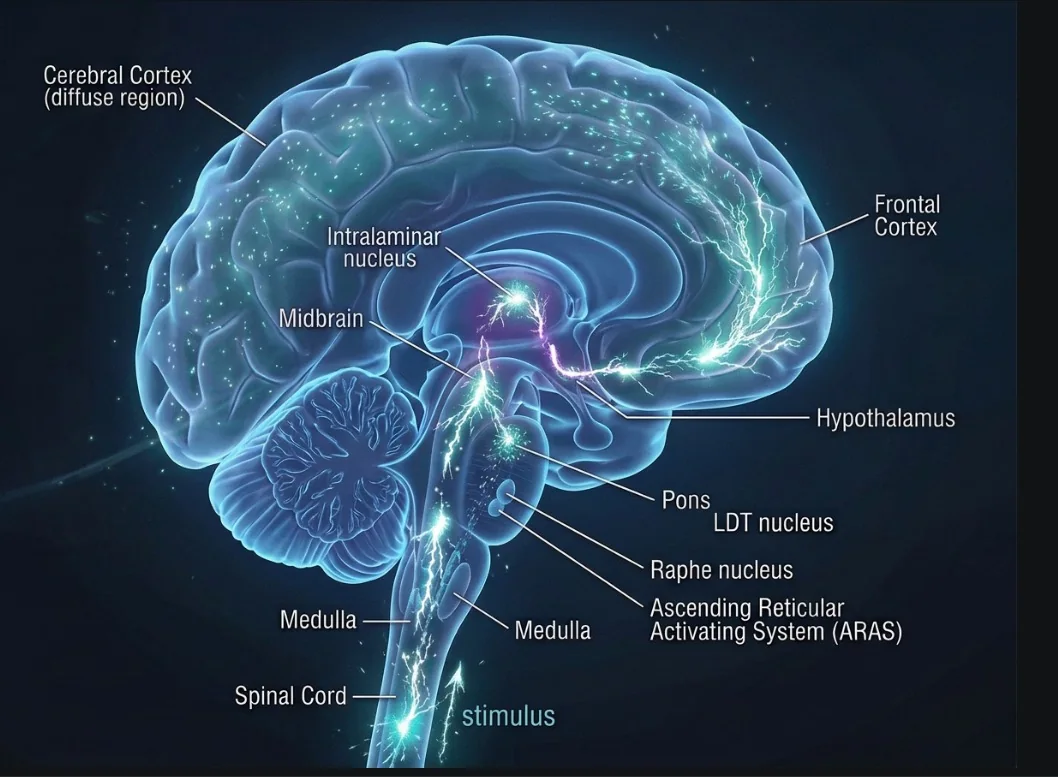
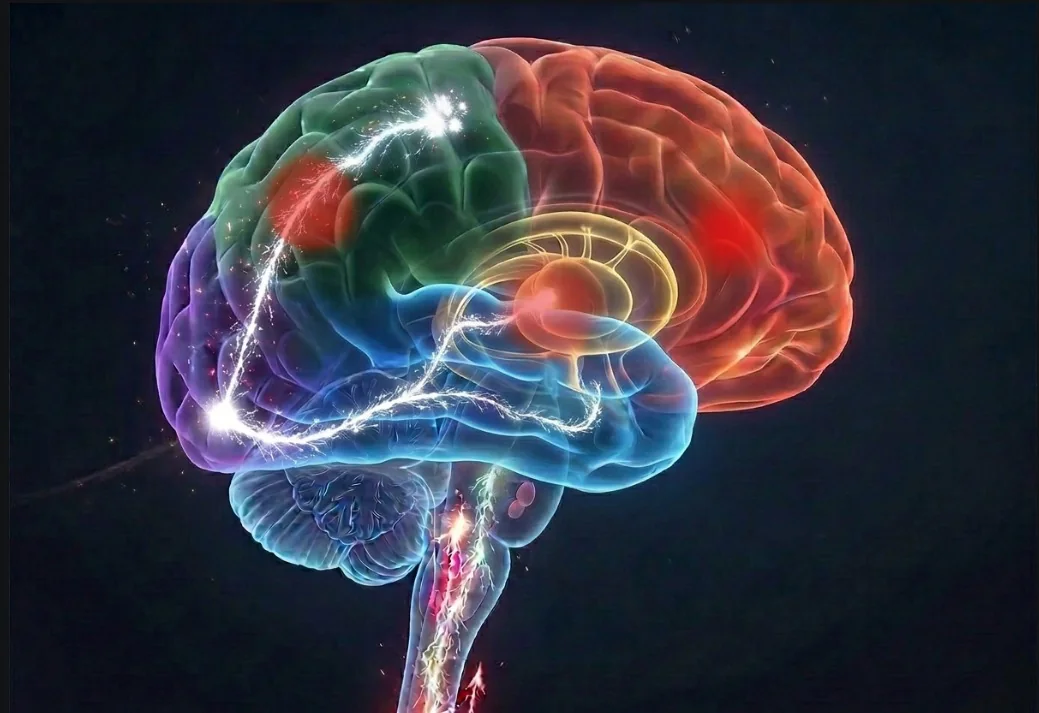
Figure 2. Ascending Reticular Activating System (ARAS).
Visual pathways and affordances
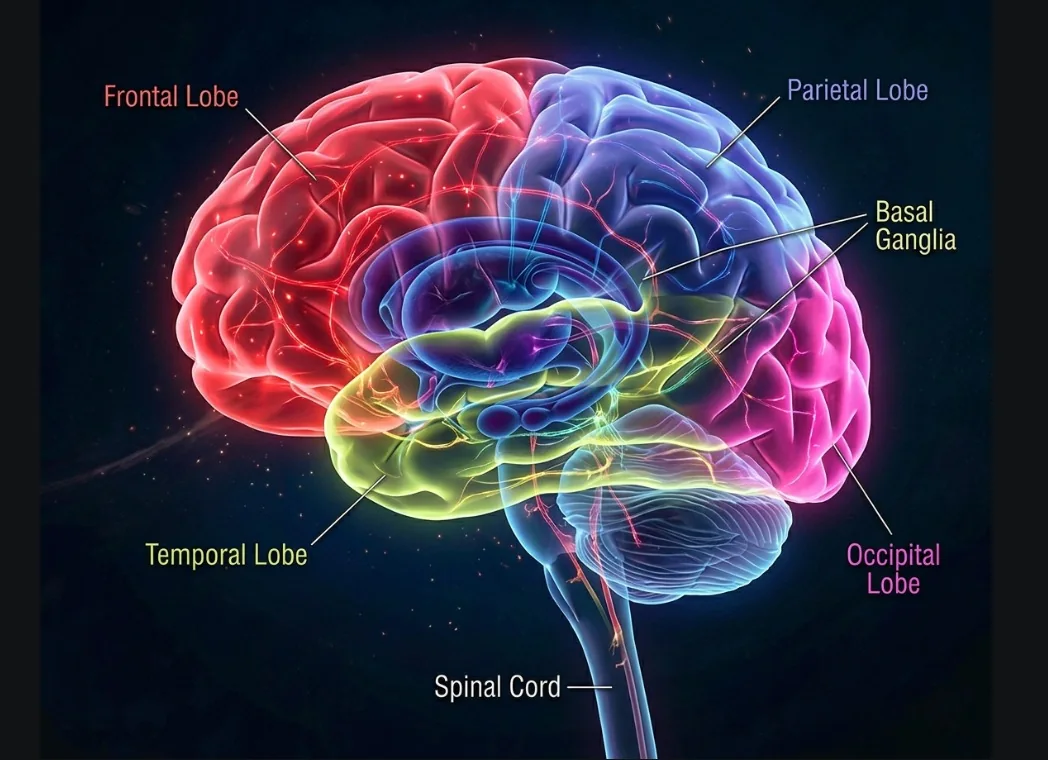
Figure 3. INPUT visual data processed into dorsal and ventral streams
Gaze, attention and selection
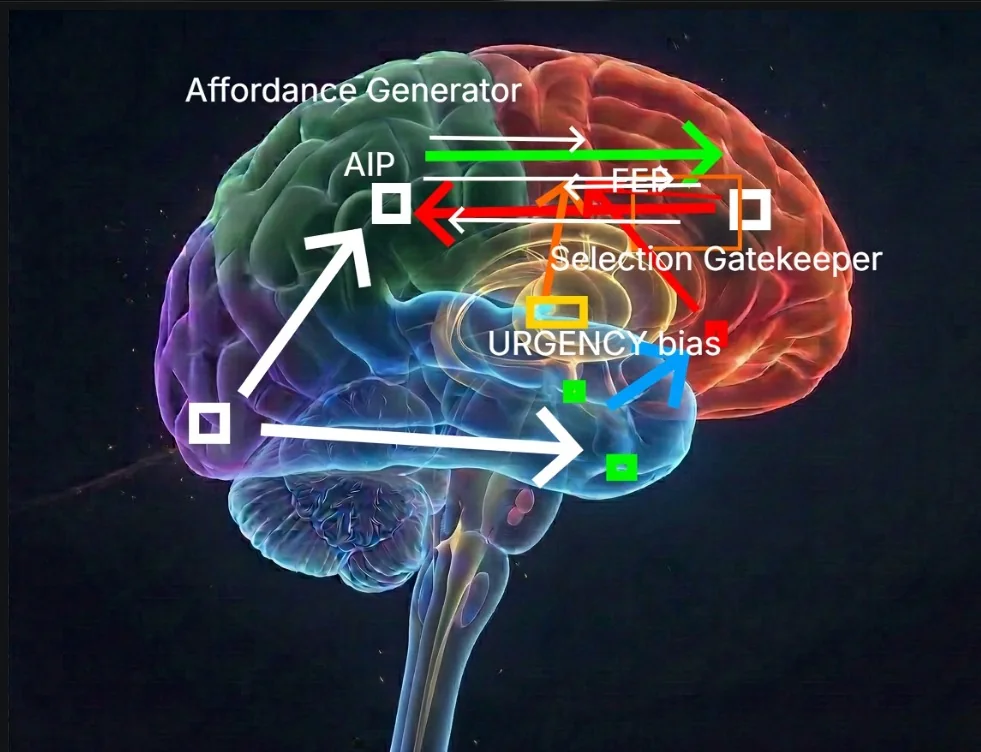
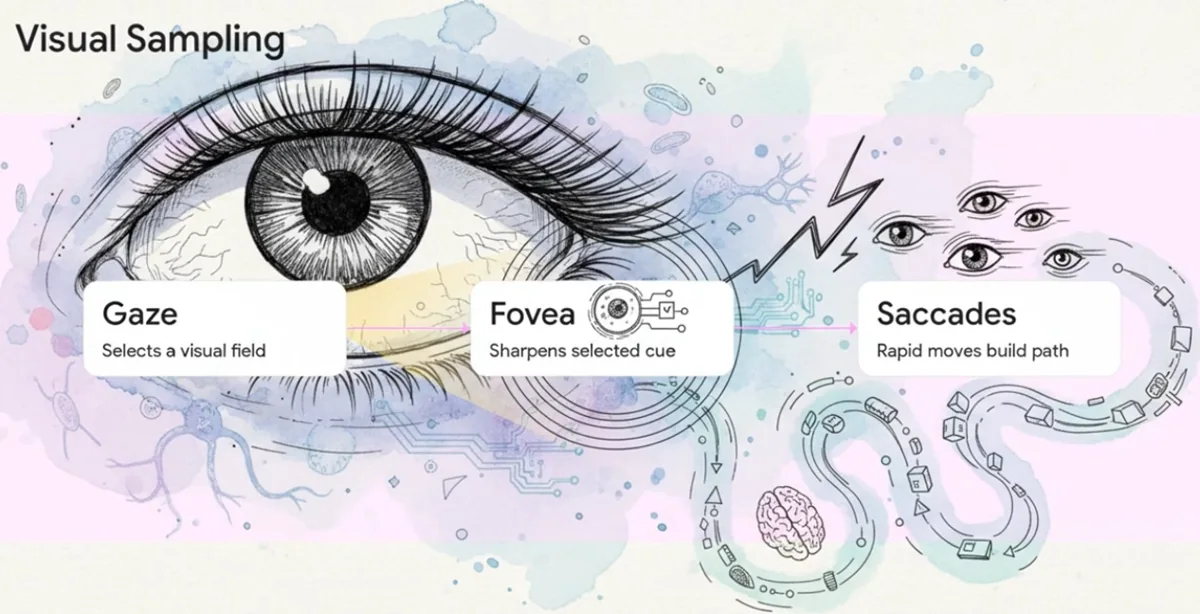
This was when GAZE centres for saccades, FEF and the retinal fovea entwined to evaluate sensory input every time, matching sensations and predictions.
It is the apical decision-making code circuit at play.
Figure 4. Affordance generator, selection gatekeeper and urgency bias.
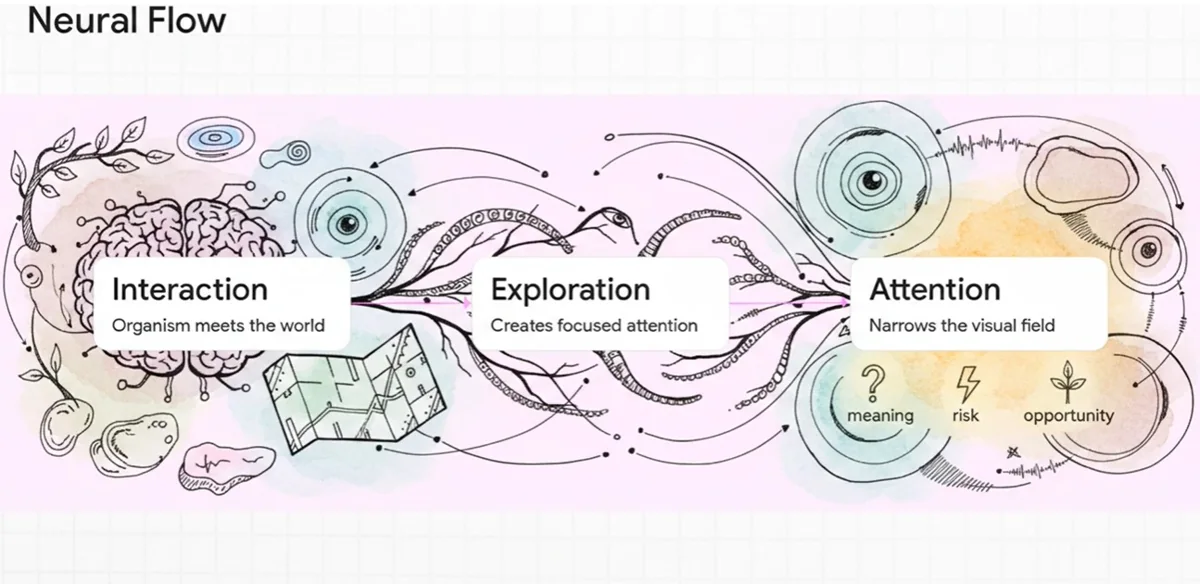
Visual sampling and attention
Figure 5. Visual Sampling — gaze, fovea and saccades.Figure 6. Neural Flow — interaction, exploration and attention.
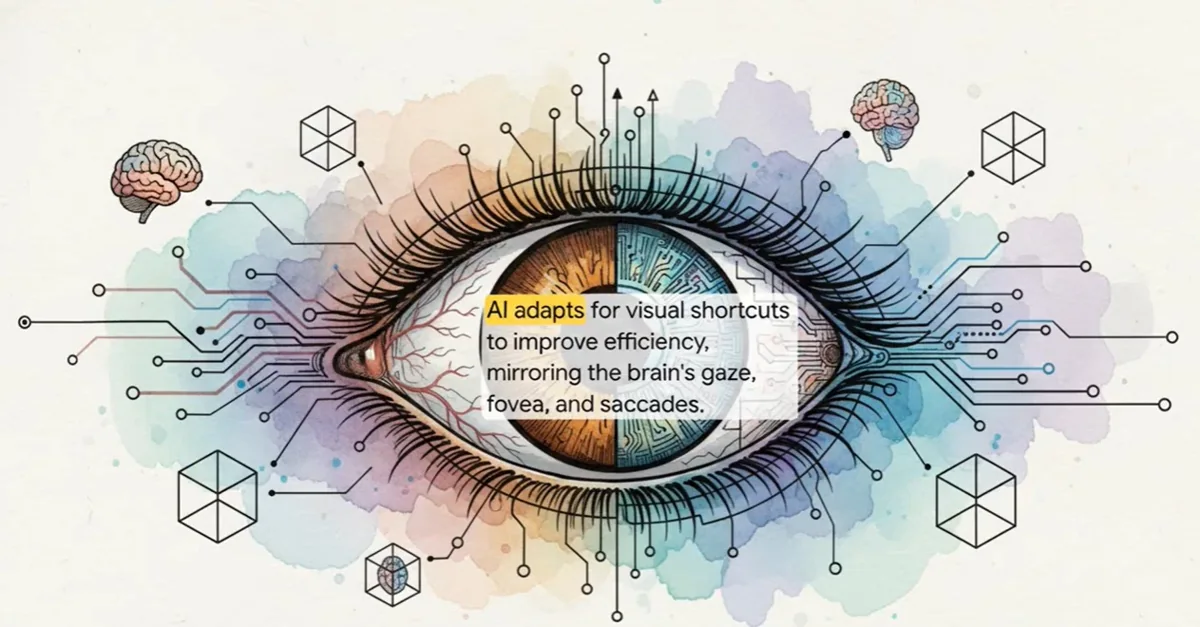
FAST FORWARD to silicon evolution, and now the same logic—from visual inputs to interpretation and intelligent decisions—is visible in all forms of AGI–robotics. GAZE and fovea, along with affordance loops, always produce efficient and intelligent decisions in interactions.
Figure 9. AI and visual shortcuts — gaze, fovea and saccades.